
Experimentations
Are all writer's like Frankenstein in the end?

Two weeks, over 20 000 words, and I’m almost at the end of Act 1. The whole writing process has been a hurricane of trial and error, and I have already picked up some nuggets of wisdom (or foolery) on my way.
1. It’s ok to fuck up
When writing academic stuff, or when I’m teaching students how to write said academic stuff, I always, always tell both myself and them that writing and editing at the same time is impossible. Sure, if you notice something glaringly obvious or abhorrent, like a typo or a sneaky occurrence of passive voice, it’s fine to correct it on the spot.
However, that oh so comforting and completely futile process of writing one paragraph, then editing said paragraph over and over and over again, that has been and still sometimes is one of my really, really bad writing habits. It feels nice, it gives me an illusion that I’m actually accomplishing something. Like, who doesn’t love a perfect sentence? A nice and flowy string of sentences with every comma, period and em-dash at their proper place?
In academic writing, I have managed to beat that habit out of me, most of the time. But now, when I’m writing something else? Well, that’s a different story.
I have managed to keep my editing urges to a minimum, but it’s hard. It’s really, really hard sometimes. And I need to keep reminding myself that it’s ok if I’ve fucked something up, that’s what edit passes are for, and I’m not there yet. I haven’t earned the right to do that yet, not without all the pieces of the story in place.
And this, conveniently and almost accidently leads me to my second big lesson.
2. Studying writing while writing is a bad idea
Yes, I bought “Save the Cat! Writes a Novel” by Jessica Brody. And yes, my Kindle version is an explosion of highlights and bookmarks. If I had a hard copy, the weight of the post-it notes in between the pages would double the weight of the book. I also might have accidentally watched an obscene amount of YouTube videos about developmental and line editing, storytelling, publishing, agent hunting, and I might have Brandon Sanderson’s lectures for Fantasy and Science Fiction writing course as a playlist.
In that sense, I’m unhinged and unravelling. I’ve done some developmental editing for friends in the past, and I’ve been a beta-reader for very obscure books, so I have had a rudimentary understanding of structure, hooks, story beats, and all that good stuff, but now I’m taking it seriously.
And don’t get me wrong, learning things and finding a conceptual framework for things you already know at some level is always a good thing. For me, it has definitely helped to really identify places in my story where I need to bring some things together, and gives me good landmarks for where to place big events and twists in the story. But it also affects the actual writing. It gives me new ideas, and that can sometimes be dangerous.
For me, the dangerous land is a place where my brain can latch onto a formula, where it can latch onto some ineffable (god I love that word, thank you Terry Pratchett!) ideal pattern that promises a perfect story. And when I hear the word perfect, some idiotic and overly ambitious monster latches itself onto my head and whispers into my ears that unless I get it 100% right, I should just forget about even trying.
But there is no perfect story, and everything has already been done before. We’re all Frankensteins, trying to breathe life into bits and pieces that every single story shares.
3. My words are not mine
When it comes to the act of writing, I’m in my element. Time disappears, and words flow into the draft. I’m not writing, I’m more like a lightningrod for electric bursts of weird expressions and metaphors. And when I wake up, I can read subtle hints of the prose from the previous book I have just put down, and I see the echoes of the style and expression of someone else. I’m stealing from the giants while standing on their shoulders.
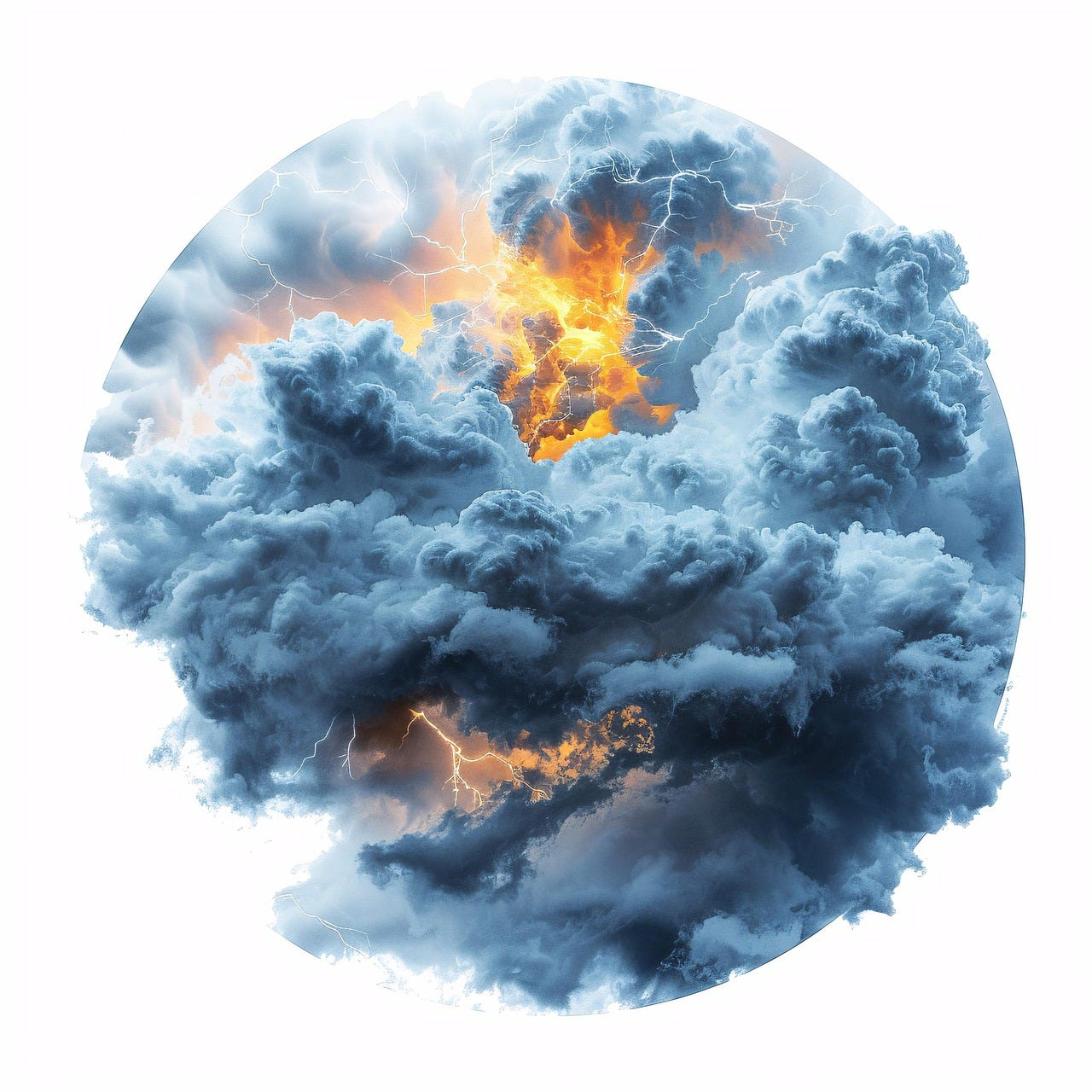
I have a habit of lifting quotes of beautiful or otherwise lovely prose from the books I read and writing them longhand to a notebook. This practise brings me so much joy, it gives me a private gallery of brilliant sentences that I can marvel at when I’m feeling like I need an acute pick-me-up. For example, take a look at this quote from Stephen King’s “It” (yes, I started to watch Welcome to Derry, and started to reread the book):
In the shutterflushes of light, the clouds look like huge transparent brains filled with bad thoughts. (p. 198)
It’s sharp, it’s disgusting, it’s evocative. It makes me squirm. It makes me jealous.
It makes me afraid that I have no voice of my own.
And at the same time, I get feedback from friends and family that I do have a voice, and sometimes that voice is almost too overpowering. I have a hard time believing them.
The rational tenth of my brain knows that nothing is original and every writer steals something; there is no such thing as an original story, nor is there an original way to write. There is no original style; everything has been done before. It’s like writing your research paper and reading almost the same article by someone else half an hour after submission. I know I did the work, I know that, but is it mine any longer?
I’m trying to learn how to be ok with the fact that the only thing that makes my work original and mine is, well, me. And that is sometimes truly terrifying.
I really adore how evocative this is. Your whole writing really and how much of the writer brain that is most vulnerable and sensitive you expose and in so doing, show us we are not at all alone in our so called bad habits, fears and journey.
I also agree that studying writing while writing is a bad idea. I do it and the algorithm keeps me stumbling into the 'how tos' and 'what not to dos' of writing and every time, I am lost questioning my imagination and creativity and judging every paragraph.